|
–Geoff-Hart.com:–Editing, Writing, and Translation —Home —Services —Books —Articles —Resources —Fiction —Contact me —Français |
You are here: Home (fiction) --> Channel Islands --> May 14: Jersey Island
Vous êtes ici : Accueil (fiction) --> Channel Islands --> May 14: Jersey Island
Today's trip was to the Jersey Zoo, which originated as the Jersey Wildlife Preservation Trust back in 1965, which in 1999 became the Durrell Wildlife Conservation Trust. The institution was founded by Gerald Durrell, who began his career as an animal collector for the world's great zoos. After a number of successful collecting expeditions, he realized that what he really wanted to do was collect animals for himself, for both esthetic reasons (he loved animals with a consuming passion) and for ethical reasons (to preserve them for future generations). He was one of the first collectors to seriously embrace the preservation of rare and endangered species as well as the notion that zoos should be about creating a safe environment for the animals, and only secondarily make the animals easy for tourists to see.
I encountered Durrell's writing early on, as a pre-teen nearly (yikes!) 55 years ago, when my parents gifted me with a complete collection of his writings. It's hard to establish correlations after so many years have passed, but it seems highly likely that I chose to study ecology in university because of my love of Durrell's descriptions of animals and their social and biological environments. That's not to say I didn't end up as a "jack of all trades, master of few", though my actual formal education was much wider, including deep dives into plant physiology and genetics. Over time, I set myself an informal goal of knowing something about everything—which even then I knew was impossible, but the effort of trying seemed worthwhile anyway.
I actually met Durrell once, not long after I encountered his writings. At the time, I was working in an unpaid apprenticeship for David Hughes, a British conservationist working at the McGill University Raptor Research Center. He set me to work learning how to hand-feed a common, non-endangered species (kestrels) and spend my days with them so they'd become sufficiently accustomed to having humans around that they'd be willing to breed in captivity. The ultimate goal was to apply what we learned to endangered species, like peregrine falcons. It worked surprisingly well, and I like to think that I helped advance the subsequently successful captive breeding program in Canada and elsewhere. To reward me for my unpaid labor, Hughes brought me to a fundraiser event for the Jersey Trust. I don't remember much of my meeting with Durrell, other than that he was (as the British say) "knackered" after an exhausting flight and 24/7 networking to fund his new zoo—he was so tired he barely acknowledged me, other than to encourage me to keep doing the work I was doing.
Fast forward 55 years and when Madame and I decided we'd be going to the Channel Islands, I knew we'd have to stop at the Jersey Zoo to see it for myself. (Durrell's been gone something like 30 years now, so no hope of meeting him again.) So today we spent the day at the zoo and it was... underwhelming.
Part of that was because the zoo lived up to its original goal, which was to create a safe space for protecting endangered species even if that space wasn't particularly tourist-friendly because the animals often had enough of being on display and hid under a bush. But I think the lion's share of the credit ironically goes to the success of Durrell's original vision, which has been adopted widely, including by many of the world's best zoos. So when you visit a modern zoo, or at least one of the good ones, you'll see the Durrell model at work and if you didn't know the history, you wouldn't know what the fuss was about. The result is that the Jersey Zoo doesn't appear dramatically different from other zoos that followed its lead: its adolescent rebellion period is over, and it's now a leading and mature global citizen. Part of "the establishment"!
That being said, the grounds of the zoo are lovely. It originated as a huge estate, and is now covered by lovely vegetation and flowers, and lots of paths so that it's easy to stroll around. It emphasizes endangered species, so no lions, tiger, bears, elephants, and large ungulates. Although several of the marquee animals were not present (or were hiding really well), such as giant otters (ca. 6 feet long at maturity!) and the orangutans, and although the gorillas were hiding out initially, we did see many species that you don't necessarily see in zoos. And we finally did get to see the gorillas, who are amazing. See them as often as you want on TV, but it can't convey their power and grace; for that you have to be there in person and see them in 3D.
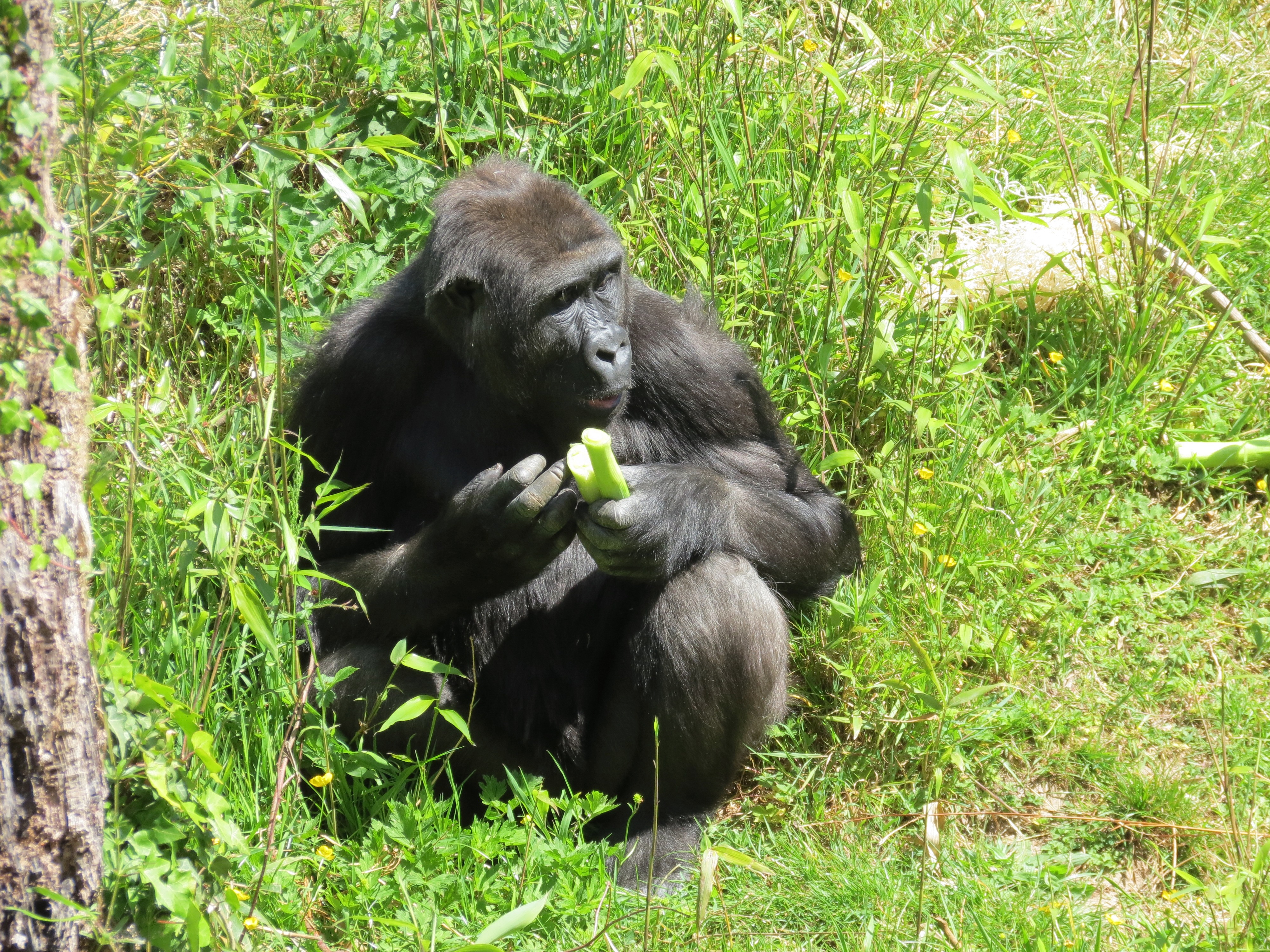
Gorilla chilling with breakfast:
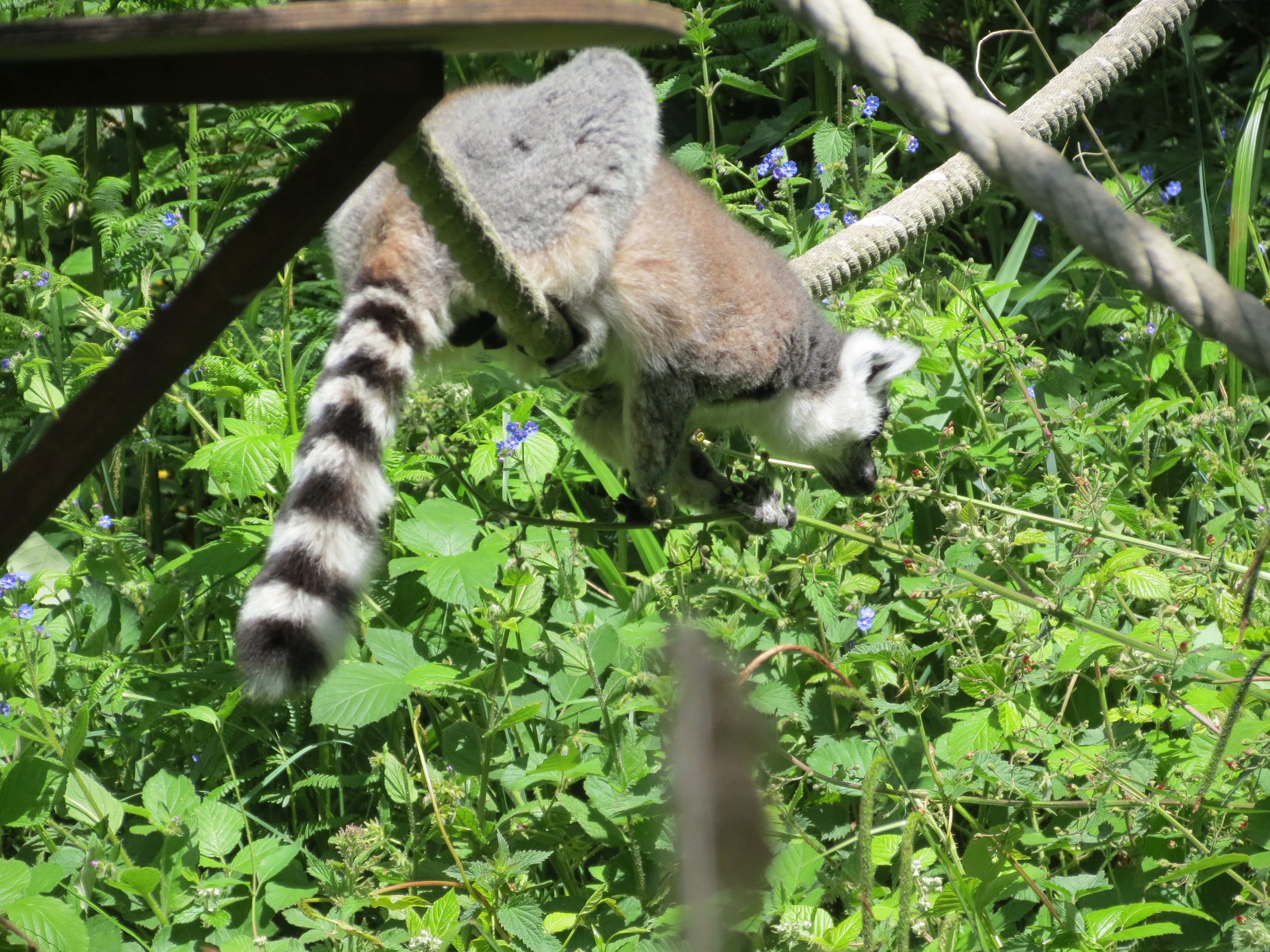
Ring-tailed emur:
Capybara siesta:

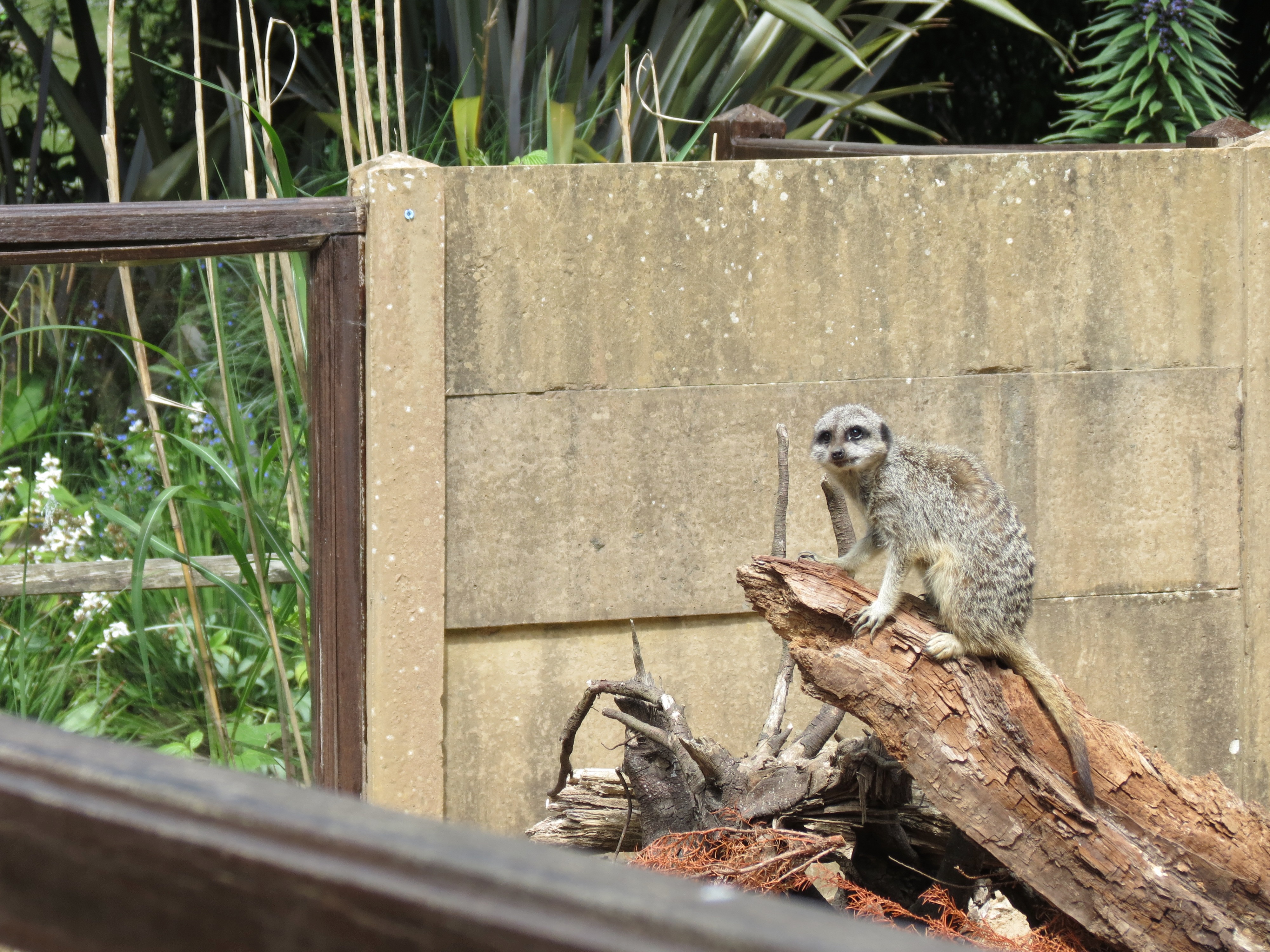
Meerkat (love the face!):
So although I stated earlier that the visit was underwhelming, that's not to say it wasn't a day well spent, particularly since the predicted rain held off and we had beautiful sunny and breezy weather. (A tad cold for Madame, but she warmed up while we visited the reptile and amphibian house.)
Lunch at the zoo's restaurant was a surprisingly good green curry with vegetables and rice. For dinner, we went back to Soy. Shoshanna had scallops, and we shared duck gyoza (dumplings) and beef tataki (beef cooked just enough to be still pink, in a fried sushi-type wrapping). Really good "burn out the back of your sinuses" wasabi and milder but tasty pickled ginger. A shared Liberation Gold ale, just because. Then, because we're on vacation, we finished with an apple/pear/cranberry crumble topped with a scoop of really good vanilla ice cream. It was all delicious.
Tomorrow, one last hike before we move on to Guernesy!
©2004–2026 Geoffrey Hart. All rights reserved.