|
–Geoff-Hart.com:–Editing, Writing, and Translation —Home —Services —Books —Articles —Resources —Fiction —Contact me —Français |
You are here: Home (fiction) --> Channel Islands --> May 12: Jersey Island
Vous êtes ici : Accueil (fiction) --> Channel Islands --> May 12: Jersey Island
Today's tourism was intended to be more low-key: to visit a couple places out in the countryside and learn a bit more about Jersey history. All involving much standing around and walking short distances between exhibits, but not a ton of actual hiking, apart from a couple of brisk 15-minute walks from the nearest bus stop to the historical sites.
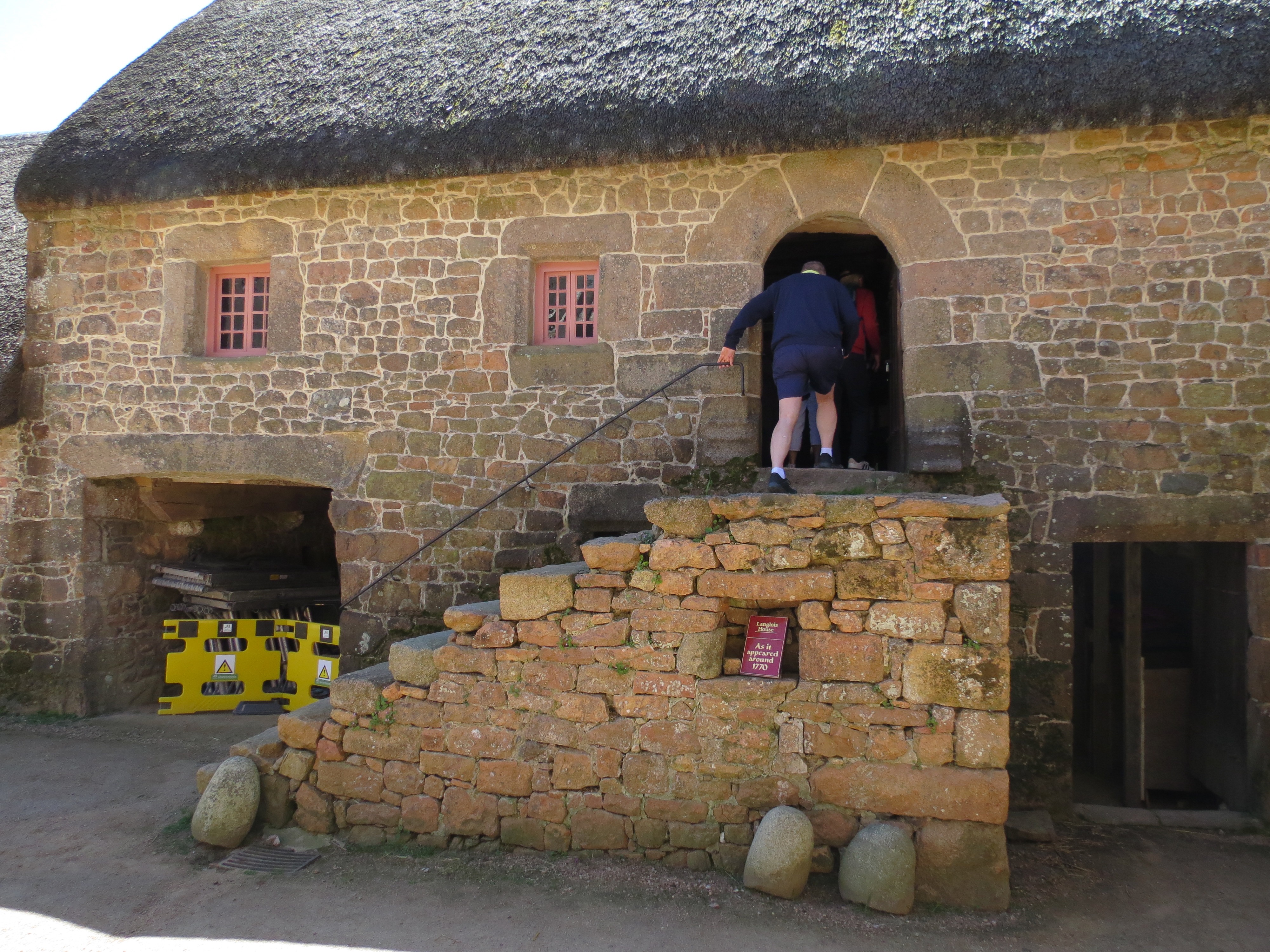
The Hamptonne Country Life museum was our first stop. It's a large-ish country estate that has existed in one form or another since the 1400s, with new buildings being added as the owner became more prosperous. For example, he added a couple rooms for laborer families, moved from a fairly classical "animals live on the ground floor to generate heat to warm us when we're sleeping on the 2nd floor" design to something more like a modern townhouse by the 1800s. Eventually the owner donated the whole place to the Jersey Heritage Trust, and it's been managed for the public good ever since.
Stone house with thatched roof:
One of the big money-makers of the estate has been their large apple orchard, which produces a dozen or so varieties of apple that are sold as fruits or crushed and fermented into hard cider. They don't have a license to sell the cider, but as Steven, the docent who gave us the tour, noted, they can offer us a free drink. Which he did. This batch was very dry (not sweet), and Shoshanna described it as "paint thinner". I don't think it was that bad, but it was certainly... umm... assertive.
Apple crusher and cider press:


Steven has worked there for a long time, so he knew all about the history and how things work. He was knowledgeable and funny, and I particularly liked his line about how one of their seasonal workers, from the West Indies, mixed some Caribbean rum into his personal cider supply and then offered offered samples to the rest of the staff, after which, Steven noted, he remembers nothing.
Anyway, I considered it a good tour. We got out in the countryside, which is lush and green, and saw many things about how country estates used to farm and a bit about how people lived back then. However, Shoshanna and I were disappointed that we missed the alternative type of tour offered by the center, in which one of the staffers dressed up and took on the role of someone from different historical periods during the estate's evolution.
Before leaving, we stopped for lunch at the museum's coffee shop. We shared a sausage roll and a "stuffed jacket potato", which is a baked potato still in its skin, but sliced in half and filled with various types of yumminess. Ours was tuna salad with grains of corn. The sausage roll was a bit disappointing, but the potato was excellent. Throughout the meal, we were watched carefully by a flock of chickens and their chicks, who did their best to intimidate us into feeding them. Signs everywhere urging visitors to not feed the animals, but clearly the animals were having nothing to do with that rule.
Next stop was the War Tunnels, a museum created by refurbishing the network of tunnels dug deeply into the rock during the Nazi occupation of Jersey. The original goal of the tunnels was to help fortify the island against a feared reconquest of the Channel Islands by the British (with massive casualties for the occupiers), which never happened. Instead, the British largely ignored the islands until the war was over, since the Germans couldn't attack England or Allied shipping from the island. So the Allies simply bypassed them. But the fear of counter-attack immobilized large numbers of troops and large amounts of supplies that would have made things more difficult for the Allies during the reconquest of Europe.
Hospital room and mining mockups:
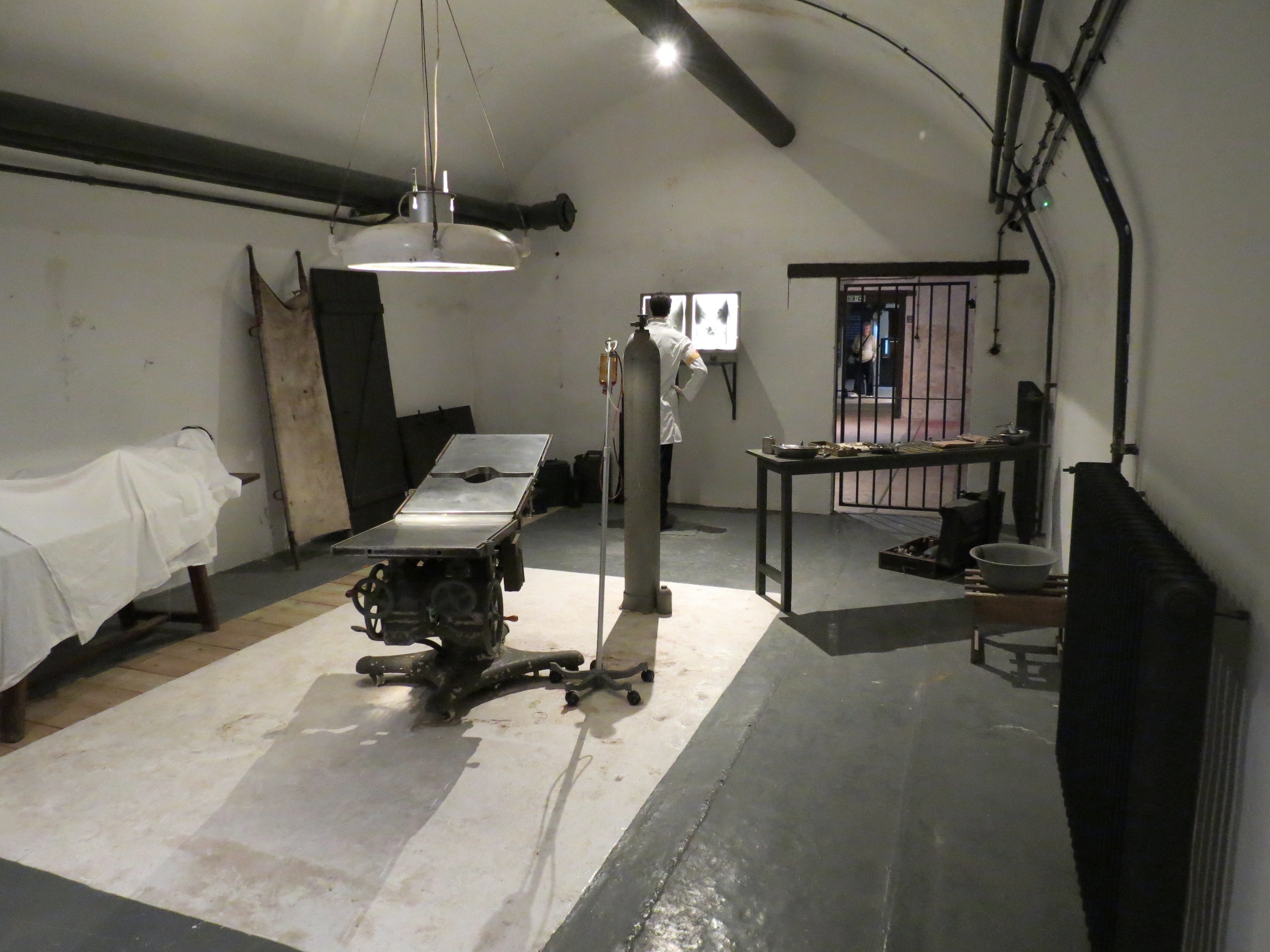
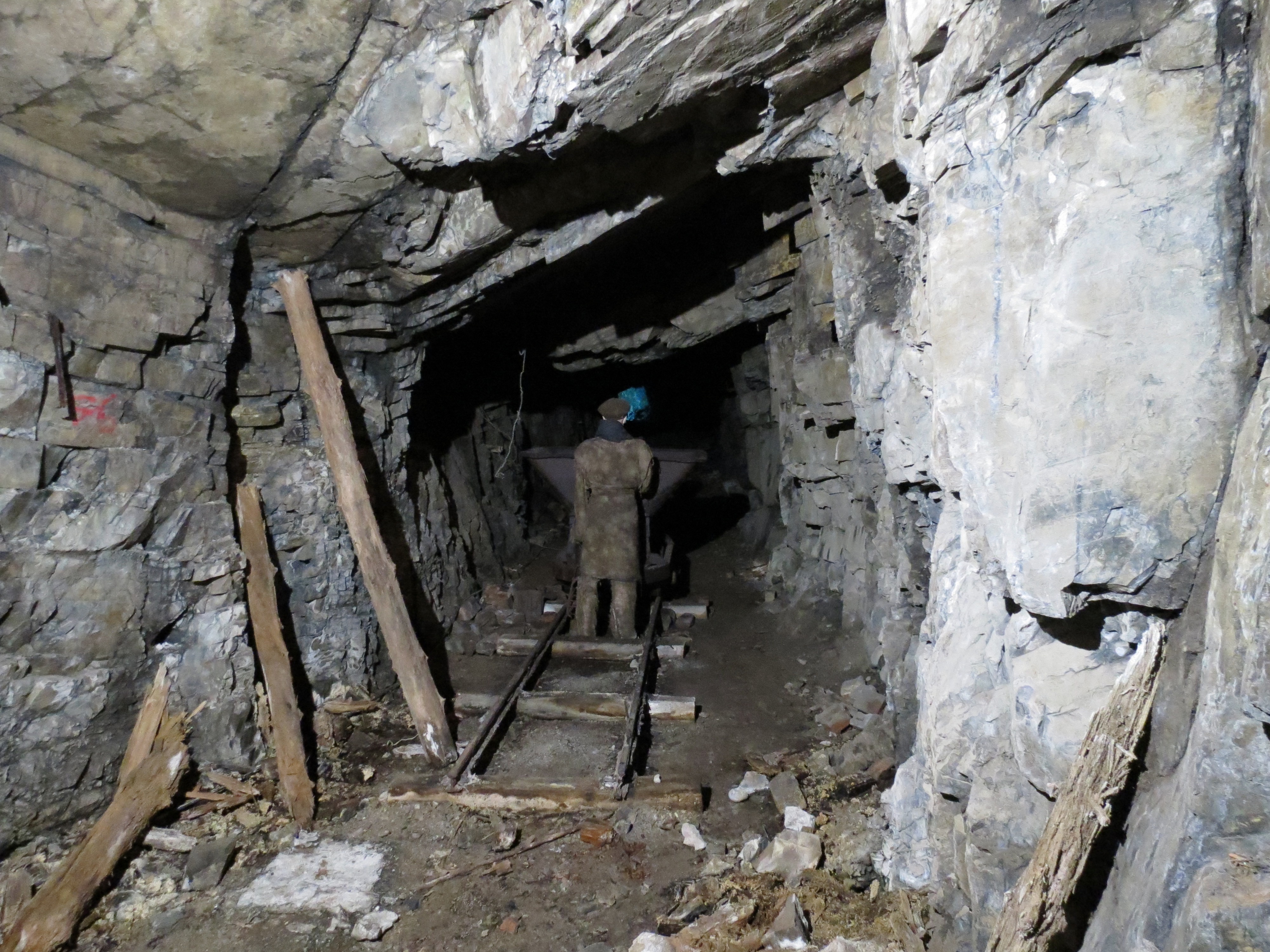
The museum tells the stories of native Jersey Beans during the occupation, which are both horrific and inspiring. The island showed, in microcosm, the best and worst of humanity. The best included helping escapee laborers to hide from the Germans and working together to keep up morale, while seeking ways to coexist with the Germans without becoming collaborators—a difficult balance to strike. The conquest of the islands also initially proceeded in a civilized fashion governed by the rule of law (e.g., punishing soldiers from harassing civilians or stealing from them).
The worst was how all the norms of "civilized" warfare were progressively abandoned as the Allies began winning the war and Jersey Beans began undermining the Nazi efforts to impose order, leading to beatings and torture, not to mention neighbors betraying neighbors and exporting civilians to die in German death camps. And, of course, most of the work to dig the tunnels was done by slave laborers, many of whom were worked to death, killed by cave-ins and other mining accidents, or exported to Germany for execution in concentration or labor camps. There was a large group of German students visiting the museum, and it would have been fascinating to learn what their teachers were telling them and how they were reacting.
There were many stories of courageous rebellion by islanders, but most of them ended badly. Of course, this being war, there were also incidents you had to laugh at. For example, one escapee stole a small boat and rowed 20+ km to England, where he was arrested until they could confirm his identity. They welcomed him back to England, then proceeded to charge him 10 shillings in import duties for his boat.
Dinner was at a new-to-us restaurant, Soy, in the center of the shopping district. It seemed mainly a fusion-type cuisine, with a large selection of sushi but also other types of seafood and quite a number of dishes that would satisfy non-seafood'o'philes like me. Shoshanna had a sizzling platter of scallops with mixed vegetables, and I had a deliciously savory lasagna, perfectly cooked and full of local beef and really fresh, stretchy/chewy cheese. Beverages were a really smooth and light Spanish beer for me ("Madri", short for "Madrid"), and a large glass of merlot for Madame. Both meals were huge portions, and even though Madame and I tend to eat more than most people, we still had to work to finish it all. We were way too full for dessert, tempting though it was.
Tomorrow's plans are still up in the air. We're pondering a 3-hour hike at the northeastern corner of the island, which will offer more cliff views and an impressive castle at the end of the hike. It'll be easier than yesterday's big hike, as it's shorter and has less vertical changes (200 m rather than yesterday's 326 m), thus easier on the knees. But since we've already done one cliff walk, we're also considering doing a longer but easier walk along the sandy beaches of one of the large bays in the southwestern corner of the island, where we haven't hiked yet. That will depend on the tides, since the beach is covered by the sea during high tide. But we also want to go to the Jersey zoo, which was founded by one of my childhood heroes, Gerald Durrell. Durrell, brother of the (in)famous author Lawrence Durrell, was an easly conservationist and founded the Jersey Wildlife Trust to preserve endangered species in environments closely resembling their natural habitat. He was one of the first to create a zoo that was designed for the benefits of the animals, not the tourists.
©2004–2026 Geoffrey Hart. All rights reserved.